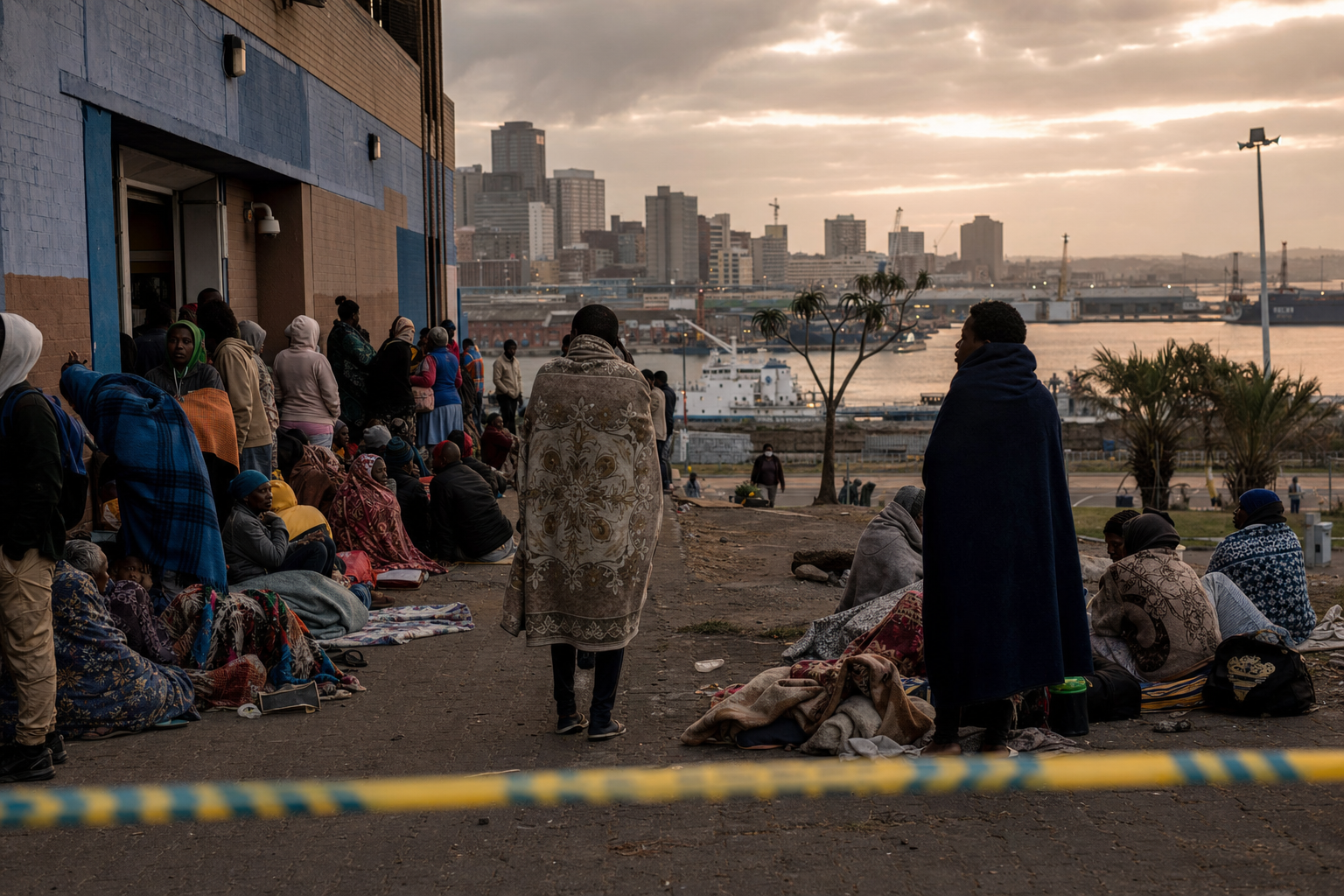
Foreign nationals in Durban are again sleeping in the open, fleeing neighbourhoods they say have become unsafe, while citizen-led anti-immigration protests sweep through KwaZulu-Natal and other major cities. Advocacy groups, international bodies and human-rights researchers describe the current crisis not as an isolated flare-up but as the latest chapter in a pattern of xenophobic harassment and violence that has recurred across South Africa for decades—and that has hit Durban especially hard.
A city with a long record of violence
Monitoring by Xenowatch, a platform run by the African Centre for Migration and Society at the University of the Witwatersrand, shows that xenophobic violence has been recorded every year since 1994. Between 2008 and November 2021 alone, researchers logged at least 829 incidents nationally, with KwaZulu-Natal recording 124 of them—the third-highest provincial total after Gauteng and the Western Cape (Xenowatch 2021 report). Durban ranked among the worst-affected cities, with 93 incidents in that period; Durban Inner City was among the most targeted locations (Xenowatch factsheet).
The national peak came in 2008, when at least 62 people were killed in widespread attacks, according to Human Rights Watch. Xenowatch’s broader tally from 2008 through late 2021 recorded at least 612 deaths, more than 122,000 people displaced and more than 6,300 shops looted or damaged—figures the researchers say understate the true scale because of underreporting (Xenowatch 2021 report).
Durban has been at the centre of some of the deadliest episodes. In April 2015, xenophobic riots in KwaZulu-Natal killed seven people and displaced around 7,000 foreign nationals from Burundi, the Democratic Republic of Congo, Malawi, Mozambique and Zimbabwe, who were forced into camps on the outskirts of the city (Doctors Without Borders). In March 2019, attacks in Durban areas including Sydenham and Overport left three people dead and drove dozens to seek shelter at a local police station and mosque (Wikipedia: Xenophobia in South Africa).
More recently, the geography of hostility has shifted. A Xenowatch overview covering 2022 to 2024 recorded 255 xenophobic discrimination incidents nationally. KwaZulu-Natal led in both 2022 and 2024—with 37 of 110 incidents in 2022 and 33 of 83 in 2024—and recorded the highest combined provincial total over the three-year period, with 85 incidents (Xenowatch 2022–2024 overview).
What is happening now
In April and May 2026, demonstrations against undocumented migrants organised by a citizen-led movement called March and March spread through Pretoria, Johannesburg and Durban, with violent and sometimes fatal results, Human Rights Watch reported. The movement, which emerged in KwaZulu-Natal in 2025 and has marched alongside groups such as Operation Dudula, advocates stricter immigration enforcement (Daily Maverick).
In Durban, a 43-year-old Cameroonian shop owner who has lived in South Africa for nearly 20 years told Human Rights Watch that people he believed were affiliated with March and March attacked him on 17 April during protests targeting foreign-owned shops. He said about ten men broke down his door, assaulted him and three colleagues with golf sticks and sjamboks, sprayed pepper spray and used stun guns, and that no law enforcement officers came to assist (Human Rights Watch).
The crisis escalated sharply in mid-May. The Congolese Solidarity Campaign said more than 500 refugees and migrants in Durban had been left stranded after attacks and threats, with people forced from homes, barred from work and warned not to send children to school (Businessday NG). On 18 May, displaced people seeking help at Refugee Social Services were directed to Durban Central Police Station; when promised shelter fell through, they spent the night sleeping outside the station, the group said (Businessday NG).
About 200 foreigners who sought refuge at the station told the Mail & Guardian they were fleeing harm in residential areas and alleged that anti-migrant forces linked to March and March had attacked them in the eThekwini metro. Spokesperson Lumo Hamadou said the group wanted United Nations intervention after police failed to open cases and, on 20 May, used tear gas and rubber bullets to disperse people who refused to leave the station precinct.
KwaZulu-Natal police spokesperson Colonel Robert Netshiunda said officers had negotiated with group leaders and used minimum legal force after the crowd refused to move, adding that police condemned all violence and that two assault cases had been opened (Mail & Guardian). Advocacy groups also alleged that police used batons, pepper spray and rubber bullets, and that live ammunition may have been fired (Businessday NG).
By 21 May, more than 100 predominantly Congolese nationals had moved to the Diakonia Council of Churches in Durban’s city centre—a long-standing place of safety—after facing threats linked to protests. Tensions exploded when members of the uMkhonto weSizwe Party and March and March arrived; protesters and foreign nationals clashed before metro police and officials from Home Affairs and the Premier’s Office intervened (IOL Daily News). The ANC in KwaZulu-Natal condemned violence while calling for urgent multi-sector action on illegal immigration and border control (IOL Daily News).
International alarm and domestic debate
On 27 April, United Nations Secretary-General António Guterres said he was deeply concerned by reports of xenophobic attacks and harassment in parts of South Africa, including KwaZulu-Natal, and condemned criminal acts by individuals inciting violence and exploiting socioeconomic conditions (UN Secretary-General statement). The African Commission on Human and Peoples’ Rights issued a similar warning the same day, calling on the government to investigate violence and ensure accountability (Human Rights Watch).
Human Rights Watch linked the current wave to deteriorating socioeconomic conditions, including unemployment above 43 percent, and to the rise of vigilante groups that scapegoat foreign nationals despite research disputing claims that migrants are the primary cause of joblessness or crime (Human Rights Watch). In November 2025, the South Gauteng High Court granted an injunction prohibiting Operation Dudula supporters from blocking migrants’ access to healthcare facilities—a precedent Daily Maverick noted is often not enforced on the ground.
Anti-immigration marchers have set a 30 June deadline for undocumented foreigners to leave the country, warning of further unrest if they do not comply (Mail & Guardian). March and March leader Jacinta Ngobese told the Mail & Guardian that foreigners were provoking South Africans on social media and questioned why some migrants were classified as refugees (Mail & Guardian).
For Durban’s migrant communities, the question is not whether xenophobic violence has happened before, but whether authorities will protect them this time. Researchers, diplomats and displaced families are watching closely as shelter, documentation and policing decisions in the coming weeks may determine whether May 2026 becomes another entry in the city’s grim statistical record—or a turning point toward accountability.
References
- Human Rights Watch — South Africa: New Waves of Xenophobic Attacks
- Mail & Guardian — Foreigners seek UN intervention after Durban police station standoff
- Businessday NG — Refugees forced to sleep outside Durban police station
- IOL Daily News — Durban immigration tensions at Diakonia
- Daily Maverick — Xenophobic marches gather pace as UN warns South Africa
- UN Secretary-General statement on South Africa — 27 April 2026
- Doctors Without Borders — Displaced by Xenophobia in South Africa
- Xenowatch — Xenophobic Discrimination in South Africa: Overview 2022–2024
- Xenowatch — Xenophobic Violence Report 2021
- Xenowatch — Factsheet April 2021
- Wikipedia — Xenophobia in South Africa